
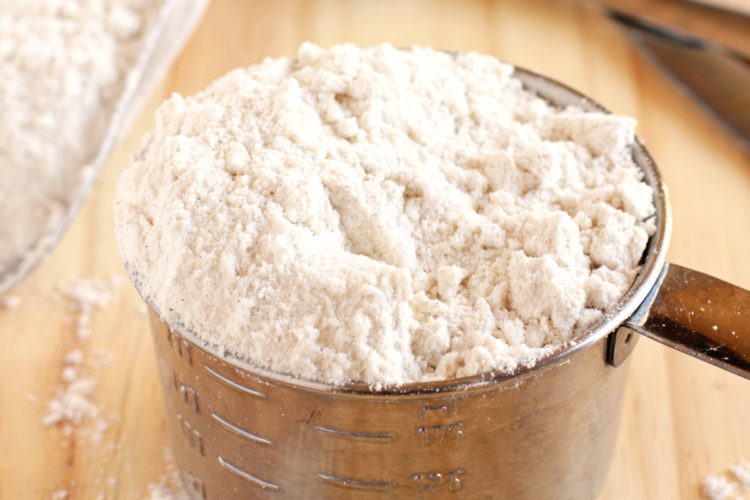
A blend of three whole grain gluten-free flours make up this Low FODMAP Multigrain Flour Blend including brown rice, sorghum, and millet.
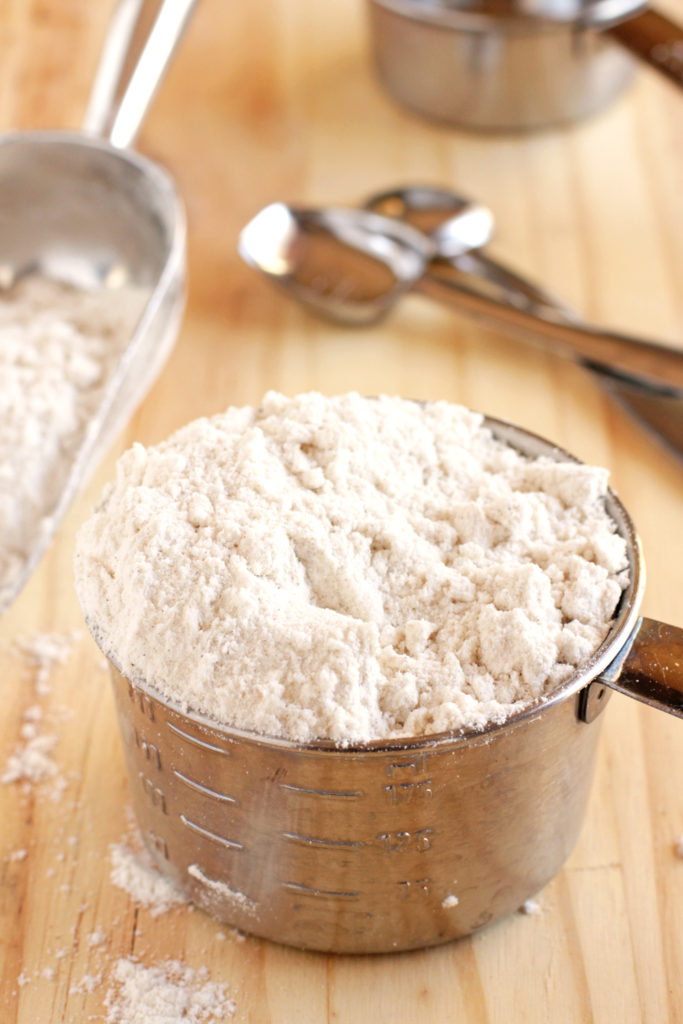
This recipe isn’t anything special. I simply took my White Rice Flour Blend and replaced some of the rice flour with brown rice flour, sorghum, and millet. Once you get used to the basics of gluten-free baking, it’s easier to play around with different flours and mixtures. Basically, I follow the rule of 2:1 protein flour to starch flour. Since rice flour is a protein flour, as are sorghum, millet, quinoa and oat flour, I just substituted. As long as the protein flours add up to 2 cups total (twice as much as the potato starch/tapioca starch) you should have a good basic gluten-free flour.
Once again, I leave any xanthan gum or guar gum out of the mix, choosing to add it to each recipe I make, because it can vary. Generally, it is 1/2 teaspoon gum to every 1 cup flour. Remember when measuring out gluten-free flours to lightly spoon the flour into the measuring cup, then level off with a knife. I hope you enjoy this Low FODMAP Multigrain Flour Blend recipe. Stay tuned for some upcoming recipes using this mix!
Be sure to try my gum-free flour blend:
Gum-Free, Gluten-Free, Low-FODMAP Flour Blend
Low FODMAP Multigrain Flour Blend
Ingredients
- 2/3 cup sorghum flour
- 2/3 cup brown rice flour
- 2/3 cup millet flour (quinoa flour or oat flour can be substituted)
- 2/3 cup potato starch
- 1/3 cup tapioca starch
Instructions
- Measure each ingredient by lightly spooning flour into the measuring cup so it is overflowing. Level off the flour with the back of a knife. Use this same method when measuring this blend for recipes.
- Blend ingredients well and store in an airtight container in a cool, dry pantry for one to three months (up to six months in the freezer).
- Recipe may be multiplied to make a larger batch.
- Add xanthan gum or guar gum to each recipe made with this flour. Generally, it is 1/2 teaspoon gum to every 1 cup flour.
Notes
This post may contain affiliate links. As an Amazon Associate, I earn from qualifying purchases.Please see my Affiliate Disclosure page for more information.




I don't have the amaranth and sorghum flours, but I do have quinoa and rice flour. Could I substitute the flours?
Sure, I think that would work.
So if I were to make bread out of this flour how much yeast would I need ti add? And any other ingredients that would be needed? Any baling powder?
I would just look up any recipe for gluten-free bread and follow it.
I just tried this mix in my bread machine on the gluten free setting, following a yeast bread recipe (2 tsp of yeast). It did not rise at all and looks flat and cracked on top…about 1.5 inches tall. It’s cooling now so haven’t tasted it yet. It smells nice. Very disappointing, given the cost of the various flours. What went wrong? What type of recipe works for this blend?
Sorry to hear this recipe didn’t work for you. I would recommend using a recipe specifically designed for gluten-free bread in the bread machine. Gluten-free bread is tricky to make, especially in a machine, and will usually need a gum (such as xanthan or guar) added in order to rise.
Have you tried sweet rice starch in place potato starch in your millet flour blend